Buying a Flat in Palermo as a UK Citizen: What Actually Works
The practical process for UK citizens buying an apartment in Palermo: the escribano, CUIT, blue dollar payments, legal checks and what a British buyer must not assume.
 Thomas SinclairWriter and editor · London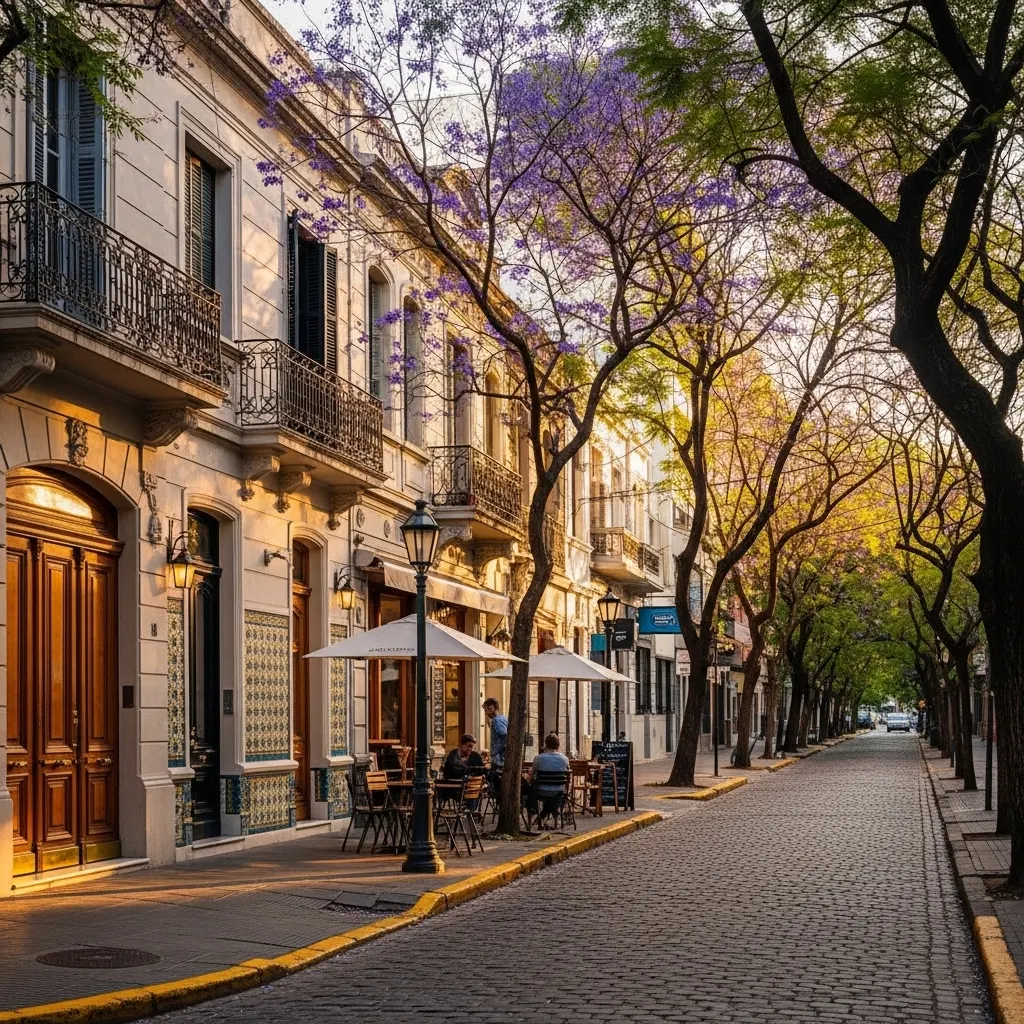
Buying property in Argentina as a British citizen is legal, well-established, and done thousands of times a year by foreigners. Palermo, with its leafy streets, international crowd, and concentration of cafes and restaurants, is probably the most common target for UK buyers. What trips most of them up is not legal complexity but cultural: Argentine property law and transaction culture are genuinely different from the UK. You cannot simply transpose your London or Manchester experience and expect it to map.
The core rules for foreign buyers
For related context, see Renting a Flat in Buenos Aires: How it Works for UK Expats.
Argentine property law places no restrictions on foreign nationals buying most types of property in urban areas. You can buy as a British citizen without Argentine residency, without a DNI, and without a CUIL. The one thing you do need is a CUIT (Clave Única de Identificación Tributaria), the tax identification number for non-workers or non-residents, which your accountant or escribano can obtain through ARCA.
There are restrictions on buying rural land in border zones or areas of strategic national interest, but these do not affect Palermo or any urban Buenos Aires property. If you are buying a flat in the city, you are on firm ground.
The role of the escribano
Every property transaction in Argentina must go through an escribano. a public notary with specific legal training in property law. The escribano is not optional and not the same as a UK solicitor. They are a third party appointed jointly (or by one party) to:
- Verify the title chain of the property
- Confirm there are no encumbrances, mortgages, or legal claims
- Witness the signing of the deed
- Register the transfer with the provincial property registry
- Collect the required taxes and duties
- Hold funds in escrow if needed
Escribano fees are typically 1.5–2% of the purchase price, paid by the buyer. This is in addition to any other transaction costs.
Choose your escribano carefully. Not all escribanos are equal. Ask for references from other foreign buyers or your property agent. English-speaking escribanos exist and are worth the search.
USD cash and the transaction mechanics
This is where the most shocking part of Argentine property happens for UK buyers. Most Argentine property sales are settled in physical US dollar cash. Not bank transfers, not mortgages. actual bundles of dollar bills, counted in the escribano's office.
Why? Argentine inflation and exchange controls have made the peso unreliable for large transactions. USD cash is the trusted medium. Sellers want physical dollars because they do not trust banks during peso crises. Cash transactions avoid the banking system's exchange rate disadvantages.
How it works in practice:
- You import USD cash into Argentina. UK travellers can legally bring up to USD 10,000 without declaration. Larger amounts require customs declaration but are legal.
- Alternatively, you transfer USD from abroad via SWIFT to an Argentine USD account held by you or by your escribano. Costs: typically 1–2% in fees.
- On closing day, funds move to the seller in the escribano's office, either from safe deposit boxes or transferred between accounts.
- The escribano signs the deed and registers with the property registry.
For a USD 200,000 Palermo flat, this means you are either bringing or transferring USD 200,000 in the day of closing. Your escribano handles the safekeeping and counting.
Typical Palermo prices (2026)
Prices in the most desirable Palermo micro-neighbourhoods:
| Location | Price per m² |
|---|---|
| Palermo Soho / Hollywood | USD 3,500-5,000 |
| Palermo Chico | USD 4,000-6,500 |
| Palermo Viejo | USD 3,000-4,200 |
| Palermo Nuevo | USD 3,200-4,500 |
For a one-bedroom 50m² flat, expect USD 150,000-250,000. For a two-bedroom 80m² flat, USD 240,000-400,000. Three-bedroom family apartments run USD 350,000-650,000 for desirable blocks.
The due diligence checklist
Before signing anything, ensure:
- Title chain is clean. Your escribano obtains the estudio de título going back 20 years, verifying each previous transfer was legitimate.
- No outstanding debts or taxes. The escribano checks municipal property taxes (ABL), provincial tax, mortgage registry, and any liens.
- Current expensas (community fees) are paid. Unpaid expensas become your responsibility at closing.
- Planning permissions match reality. Check that the unit is legally declared as residential, that any alterations had permits.
- Building is structurally sound. Hire an independent property surveyor (arquitecto especializado) for USD 200-500 to inspect.
- Ownership documentation. Verify the seller actually owns 100% — sometimes properties are in multiple names or held by inheritance.
Timeline from viewing to owning
- Weeks 1-4: Property viewings and negotiation
- Week 4-5: Verbal agreement, deposit of 2-5% to "reserve" the property
- Weeks 5-8: Escribano due diligence, contract drafting
- Week 8-10: Signing of boleto de compraventa (preliminary contract), deposit of 30% of price
- Weeks 10-12: Final due diligence, arrangement of remaining funds
- Week 12: Closing day — signing the escritura (final deed) and transferring the full funds
- Week 12-14: Registration with provincial property registry (you get keys on closing day)
Total realistic time: 3 months from serious offer to registered owner. Rushed transactions carry more risk; allow the full window.
Taxes and costs (beyond the purchase price)
On top of the agreed sale price, budget for:
- Escribano fees: 1.5-2% of price
- Stamp tax (ITI): 3.6% of price (in CABA, varies by province)
- Property registration: 0.2-0.5%
- Survey fees: USD 300-1,000 if needed
- Legal consultation: USD 500-2,000 if you hire a separate lawyer
Total transaction cost for a USD 200,000 flat: around USD 12,000-16,000 on top of the purchase price.
British-specific considerations
- UK Capital Gains Tax may apply when you sell. Argentina has its own gains tax, but the UK-Argentina double taxation treaty prevents duplication.
- UK Inheritance Tax may affect Argentine property if you remain UK-domiciled. Consult a cross-border estate planner.
- Currency exposure — your Argentine property is denominated in USD for the transaction, but expensas and daily costs are in pesos. Plan for the mismatch.
- Rental income to UK residents is declarable in both countries under the double taxation treaty.
- Property management — if you plan to rent out the flat while living in the UK, hire a local property manager (USD 80–150 a month) to handle tenants and maintenance.
Not legal or financial advice. Argentine property law is fundamentally different from UK law and serious money is involved. Work with a qualified Argentine escribano and ideally a separate lawyer reviewing the deal from your side.
Worth reading next
Frequently Asked Questions
Do I need Argentine residency to buy a flat in Palermo?
No. British citizens can buy urban property in Argentina without residency, DNI or CUIL. You need a CUIT tax identification number, which an escribano or accountant can obtain for you.
Why is Argentine property settled in USD cash?
Currency controls, peso inflation and bank distrust over decades have made USD the trusted medium for large transactions. Bank transfers exist but physical cash is still the norm at closing day.
How much does it cost to buy a Palermo flat in 2026?
Typical ranges: USD 150,000-250,000 for a one-bedroom, USD 240,000-400,000 for two bedrooms, USD 350,000-650,000 for three bedrooms. Plus about 6-8% transaction costs.
Can I get an Argentine mortgage as a British citizen?
Argentine mortgages exist but are mostly in pesos with high interest rates and short terms. Practical mortgages for foreign buyers are rare. Most foreign buyers pay cash or bring funds from abroad.
How long does the buying process take?
Typically 3 months from serious offer to registered owner: 4-5 weeks due diligence, 2-3 weeks contract preparation, closing day with full payment, 1-2 weeks registry registration.
Sources & Official Links
When the answer depends on your case
The guides on this site cover the general shape of Argentine immigration. For case-specific advice, including complex visa categories, residency or citizenship questions, cross-border tax obligations, time-sensitive filings, or family situations, a qualified lawyer can review your actual paperwork.
Lucero Legal can review your paperwork and explain the options for your case. Ask about the adviser responsible, scope, and fees before you proceed.
Talk to Lucero LegalAlso from Lucero Legal
Related Guides
 Property
Renting a Flat in Buenos Aires: How it Works for UK Expats
Buenos Aires renting has become more straightforward since recent law changes — but the process is still different enough from the UK to warrant a guide.
Read guide → Property
Argentine Rental Contracts for UK Citizens: How Leases Actually Work
Renting in Buenos Aires is not like renting in London. The contracts are longer, the guarantees are harder, and the currency choice matters more than the price.
Read guide → Property
Buying Property in Argentina as a British Citizen
Buying in Argentina as a foreigner is legally allowed and not uncommon, but it's a more complex process than buying in the UK and requires local expertise.
Read guide →