PropertyUpdated 2026-10-01 · 10 min read
Buying a building plot in Argentina: what a British buyer should check
A terreno is not necessarily ready to build on. Check urban or rural classification, title, access, services and the proposed building before making a binding offer.
In short
- Article 20 of the Constitution recognises foreigners' rights to own, buy and sell real estate, but parcel-specific rules still need checking.
- Ask for written confirmation of urban or rural classification rather than trusting the word terreno.
- A buildability assessment, boundary survey and service quotations should precede a binding commitment.
- For rural, border or waterfront land, obtain legal clearance for the exact parcel and transaction at the time of purchase.
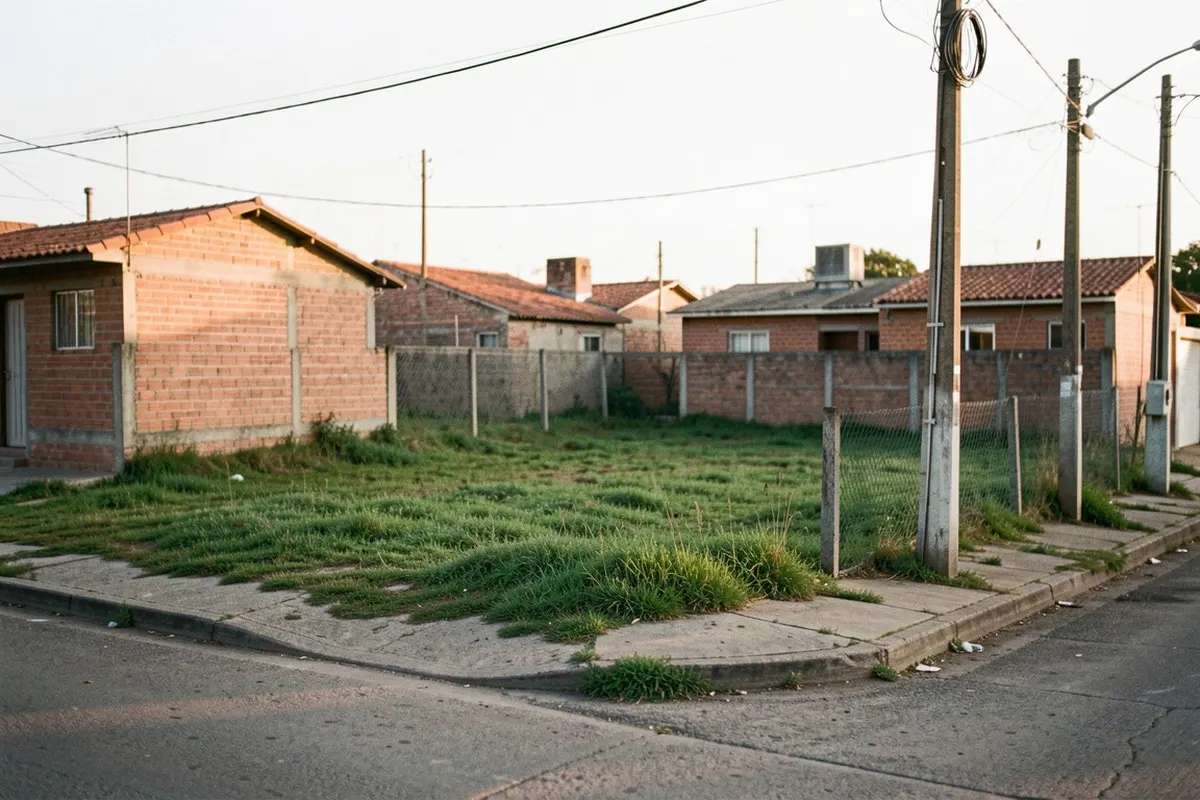
A British buyer can consider a building plot in Argentina, but a parcel described as terreno is not necessarily land on which your proposed building can be built. First establish its legal classification and registered identity, then have a local architect assess the project and an escribano investigate title. A road, fence and electricity pole do not establish buildability or foreign-buyer eligibility.
Article 20 of Argentina's Constitution recognises foreigners' rights to possess, buy and sell real estate. The practical investigation still belongs to the particular parcel, especially outside ordinary urban areas. This guide concerns choosing and checking a plot, rather than buying a working farm or vineyard. It is practical information, not legal advice.
Say what you want to build before searching
Describe the intended use to your architect: a home, a home with a workshop, a commercial building or premises with visiting customers. Floor area, access, parking, storage and possible future extension should be considered together. Permission for a house does not establish permission for a business, and a commercial land description does not settle the type of activity allowed.
Use land for sale on PlataStar to create a shortlist, recording each parcel's advertised size, location and claimed services. Treat those claims as questions for the seller and the local professionals. PlataStar includes non-residential spaces and land from brokerages and owners, with source and last-seen information on each listing. Neither the listing nor the seller's optimism is a planning decision.
For a commercial project, compare the cost and uncertainty of a plot with existing buildings for sale. Buying an existing structure still needs planning and condition checks, but it may expose costs that an empty site hides. Decide what is essential to your project before becoming attached to a particular view.
Establish whether it is urban or rural land
Ask the escribano to obtain the cadastral identity and verify the legal classification from the competent records. A small parcel can still raise rural-land issues, and proximity to a town is not a substitute for the official boundary. A house already standing on the parcel does not settle the classification either.
The Registro Nacional de Tierras Rurales publishes information about foreign ownership and certification. Its public page describes restrictions under Ley 26.737 and the court measure affecting the attempted repeal by DNU 70/2023. Do not treat a static website or an older summary as transaction clearance. Ask a lawyer and escribano to confirm the effective law and required procedures at the time of your proposed purchase, including where the buyer is a company with foreign owners.
For land near a border or water, ask specifically about security-zone, waterfront, access and environmental issues. These need their own parcel-specific assessment; a conclusion about rural ownership alone is not enough. Do not pay on the assumption that a company structure or a smaller surface area avoids every restriction. If you want agricultural land instead, farm listings can help identify the different type of property, but the legal and operating review must match that purchase.
Match the fence to the cadastral parcel
Have a surveyor compare boundaries, access and surface area on the ground with the cadastral documentation. Ask where the corners are, what the neighbour owns and whether the visible fence follows the registered line. A larger apparent garden is not valuable if it includes a neighbour's land or a strip reserved for another purpose.
The escribano should establish the seller's ownership and authority, investigate title and identify mortgages, attachments or other encumbrances. If the seller is an estate, company or several co-owners, find out what is needed for a valid transfer before agreeing a completion date. Our property due-diligence guide explains the broader title investigation and the role of independent advice.
Request the existing deed, cadastral plan and relevant debt statements before serious negotiation. For a subdivision, ask whether the individual lot has its own legally established identity and what remains to be completed. A promised future deed is a different proposition from a registered parcel available for transfer now. Your lawyer should assess that difference before you finance the developer's next stage.
Commission a buildability opinion, not a sketch
Ask a local architect to write a short feasibility report for your intended building on the exact parcel. It should identify the planning authority, applicable use, building envelope and any heritage, environmental or special-area issues. An attractive concept drawing cannot answer those questions by itself.
Buenos Aires city's official code page separates its urban planning code, building code and annexes, including catalogued buildings and special areas. Those documents are specific to the city. A plot in Pilar, Mendoza or another municipality follows its own authority's procedures. Do not reuse a capital-city rule for land elsewhere or assume that a plot's asking price includes a building approval.
Ask the architect which permissions, studies and professional submissions the project will require, what can be established before purchase and what remains uncertain. If the seller claims a project has approval, request the actual file, validity and transfer conditions. Have the architect verify that the approved proposal is the one you want, rather than a different building whose drawings merely look similar.
Prove that you can reach and service the site
Find out whether the road is public, private or reached through another property, and have the escribano identify the registered rights on which access depends. Walk and drive the route. For a business, consider the vehicle that must arrive, not just your own car. Space for a delivery vehicle to turn can matter as much as the gate width.
Ask the relevant utility providers about connection availability, the required works, who pays and what they can quote in writing. Electricity on the street is not proof of adequate capacity for machinery. For water and drainage, establish the lawful arrangement and have the technical adviser assess alternatives where a network connection is not available.
If the sales pitch says services are coming, get the responsible party, completion obligation and consequences of delay into the legal review. A development brochure is not an installation contract. Record the cost of temporary provision and whether it can lawfully support your proposed use. An inexpensive plot can become expensive if the access or service problem lies outside your control.
Inspect the ground and the neighbourhood
Arrange technical advice on drainage, soil and the foundations your project may need. Visit after rain where practicable and ask about the site's history, previous uses and fill. A surveyor, engineer or environmental specialist may be needed depending on the project. The seller's statement that the ground is firm is not a substitute for an assessment that your designer can use.
Look at what surrounds the parcel. Adjacent industry, deliveries, drainage channels, overhead lines and planned road works may affect the project even when the title is clean. For a home, test the everyday journey to shops and schools. For a business, test staff access and the delivery route during normal operating hours.
On a private development, obtain the governing rules and charges. Ask who maintains roads and shared services, whether your design needs a separate approval and what recurring contributions owners pay. Check whether the marketing promise about uses or building style is supported by those rules. A municipal possibility can still face contractual restrictions within a development.
Budget for a usable site, not just the purchase
Ask the escribano for an itemised transaction estimate in the property's jurisdiction. Stamp duty, registry costs, professional fees and any intermediary charges should be quoted for this purchase, not borrowed from a Buenos Aires apartment example. A corporate buyer also needs its accountant to assess the transaction and future ownership costs.
Set construction and site-preparation quotations apart from the land price. Include survey, feasibility, ground investigation, access works, service connections and the ongoing cost of holding the empty plot. Keep a distinction between quoted items and uncertain allowances. Ask what happens financially if approval takes longer than expected or the project must be redesigned.
With savings in Britain, agree the payment currency and route with the seller, banks and escribano before committing. Request a dated quotation for converting pounds and delivering the contractual amount. Our money-transfer guide covers the wider practical questions. Retain evidence of the funds, the payments and the acquisition rather than relying on a remembered exchange rate later.
Make the reservation depend on the investigation
Have the lawyer draft conditions that reflect the outstanding work: satisfactory title, boundaries, legal eligibility, access, services and the project's feasibility. Specify who holds any money, the investigation deadline, the documents the seller must provide and the repayment mechanism if an agreed condition fails. Do not assume a deposit comes back automatically because the plot is unsuitable for your idea.
Article 1017 of the Civil and Commercial Code requires a public deed for contracts transferring real rights over property, subject to its stated exception for judicial or administrative execution auctions. The escribano should explain the instruments proposed for your deal and how the ownership transfer will be registered. A reservation or boleto is not simply an informal UK-style offer.
Before completion, reconcile the deed, parcel description, survey, clearances, agreed payment and possession arrangements. For a particular project, submit a land requirement with the intended use and the essential access and services, rather than only a target area. A plot becomes a sensible purchase when the records and the project agree, not when the photograph looks ready for a house.
Questions
- Can a British citizen buy an urban plot in Argentina?
- Article 20 of the Constitution recognises foreigners' real-estate ownership rights. Have an escribano establish the particular parcel's title and classification and a local architect assess the intended building before committing.
- Does terreno mean the land is ready to build on?
- No. It describes land, not an approval for your project. Check classification, legal subdivision, planning, access and services against the intended use.
- What if a small plot is legally rural?
- Ask a lawyer and escribano to confirm the effective foreign-ownership rules and required procedures at purchase. Do not rely on size, a nearby town or an older summary as proof of eligibility.
- Can I rely on services promised by a developer?
- Obtain written provider information and have the developer's installation obligations and delay consequences reviewed. A brochure promise does not establish a completed or affordable connection.
- Is a building plot better value than an existing building?
- Compare the full cost of a usable project, including approvals, connections, site works and holding costs. The land price alone cannot settle that comparison.